Who is this workshop for?
This course is suitable for anyone who already has some experience with glaze theory. You know the basic components of a glaze such as glass former, stabilizer, and flux. You're familiar with raw materials like quartz and feldspar. You may have already taken a glaze course or deepened your knowledge online and through books.
The course is limited to a maximum of 12 participants. There will be personal guidance for each person's glaze project. You can work alone or in small groups.
What is included?
All materials (raw materials, pots, gloves, test tiles, etc.), preparation of the projects, and firing of the samples are included.
The course material will be made available digitally in PDF format. You will take the samples home with you.
What to bring?
- notebook
- calculator
- lunch
- test tiles in own stoneware clay (optional, I also provide test tiles in white stoneware clay)
Workshop venue
SOGO Glaze Factory
Leeuwlantstraat 118
2100 Deurne (Antwerp)Easily reach us by public transport (trams and buses all stop within 700 m of the studio) or by bike. Parking is also reasonably easy in the vicinity of the studio, but it is paid (4 euros per day for long-term parking).
Cancellation
All information regarding the cancellation of a workshop can be found in Article 6 of the general terms and conditions. You can find them here.
Seger and Stull
€ 350,00 incl. tax
Don't see a suitable date or is the workshop fully booked?
Laat je e-mailadres achter en we houden je op de hoogte als er nieuwe data zijn.
Do you already have a basic understanding of glazes? Are terms such as glass former, stabiliser and flux not entirely unfamiliar to you? Have you already taken an introductory glaze course and are you ready to take your knowledge further? Then this multi-day workshop, packed with theory as well as hands-on practice through a personal glaze project, is definitely for you.
During the first day learn all about the UMF or Seger formula.
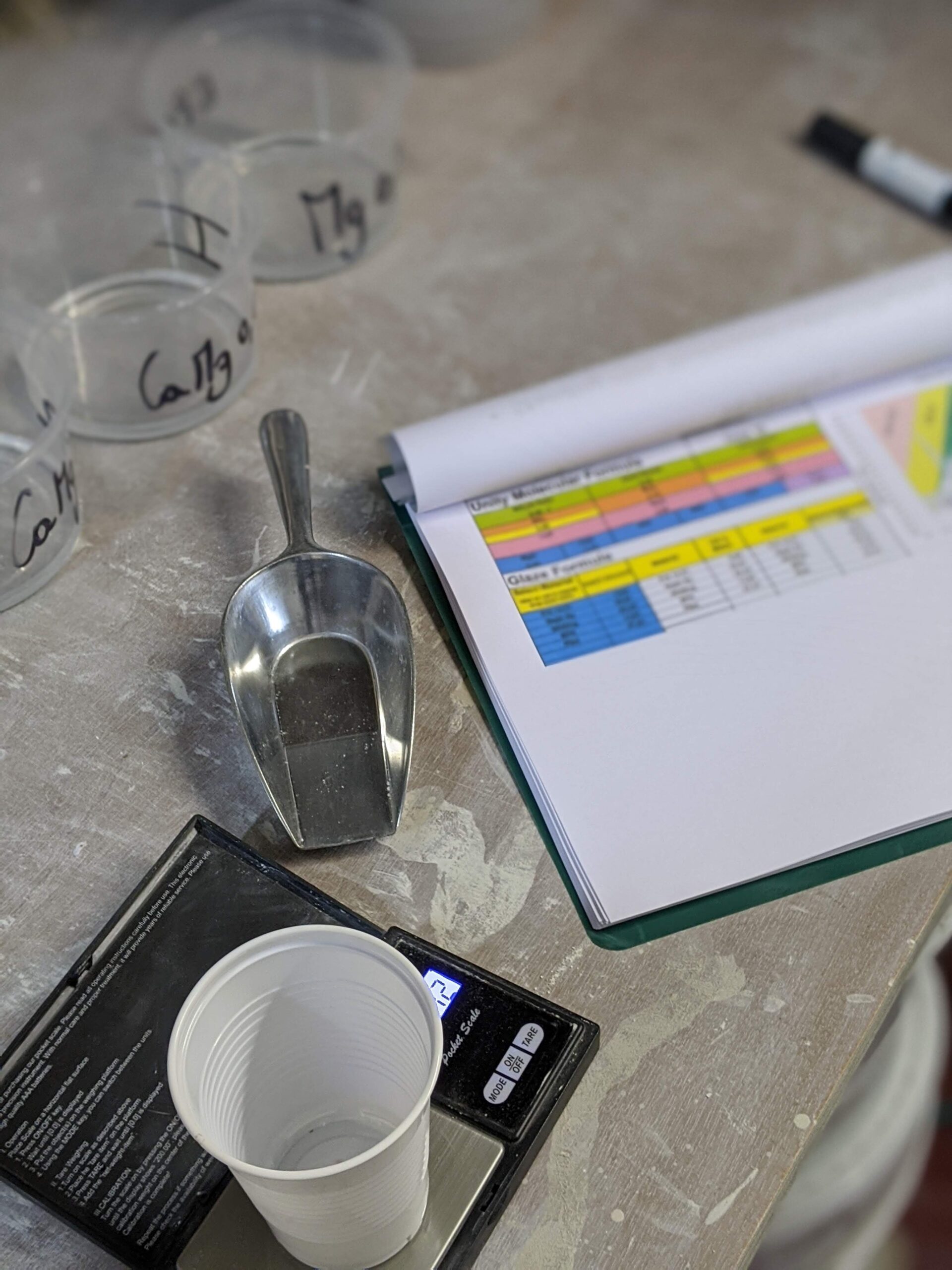
What is the Seger formula, why is it useful, and most importantly, how do you actually calculate it? These days, websites such as Glazy.org calculate it for us automatically, but it is still worth doing it yourself at least once. By working through the calculations, you’ll understand where the numbers come from and be much better equipped to interpret and use them. I’ll provide all the theory you need, and then we’ll put it into practice with a series of exercises. Don’t worry, you’re allowed to use a calculator.
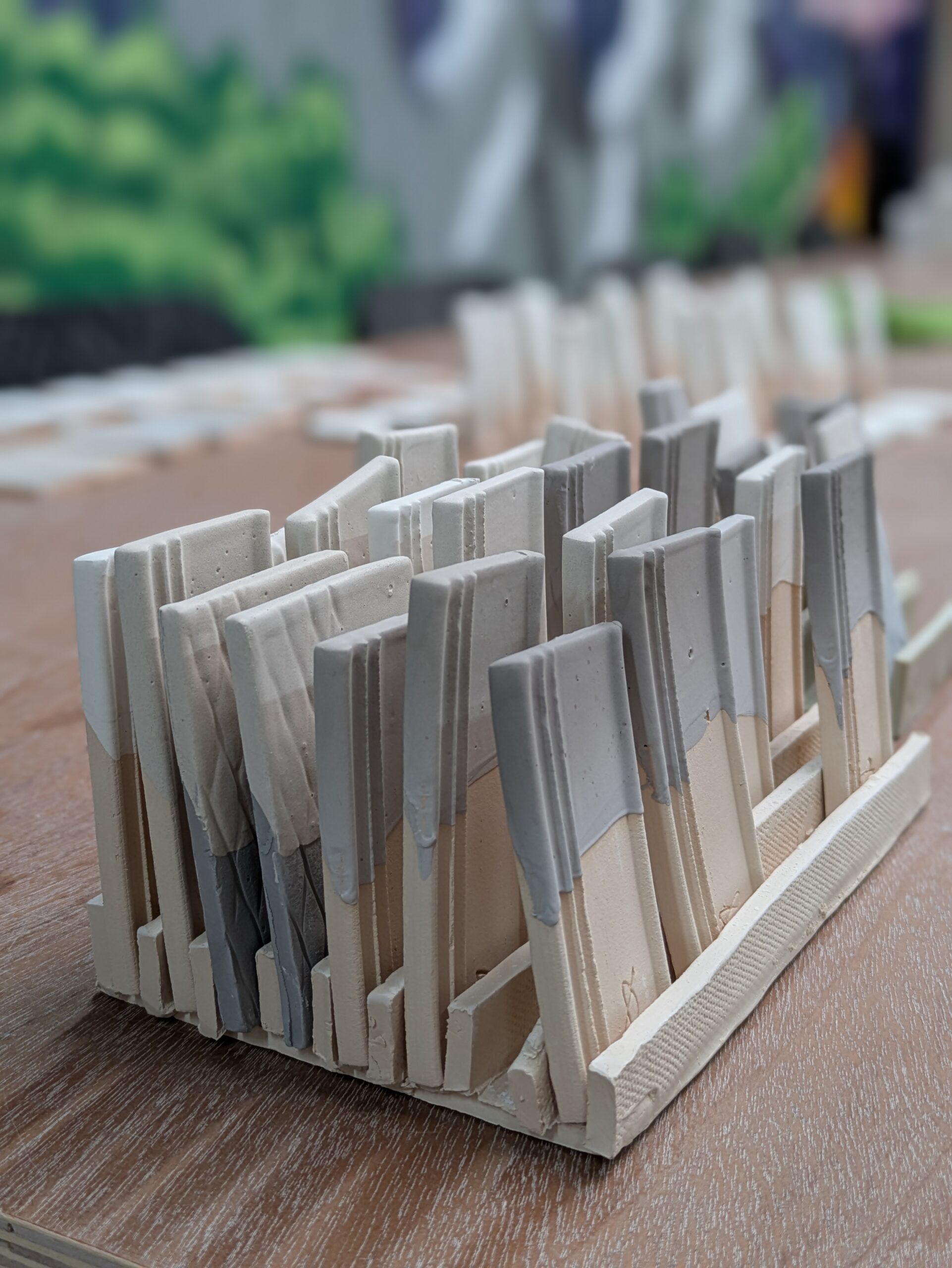
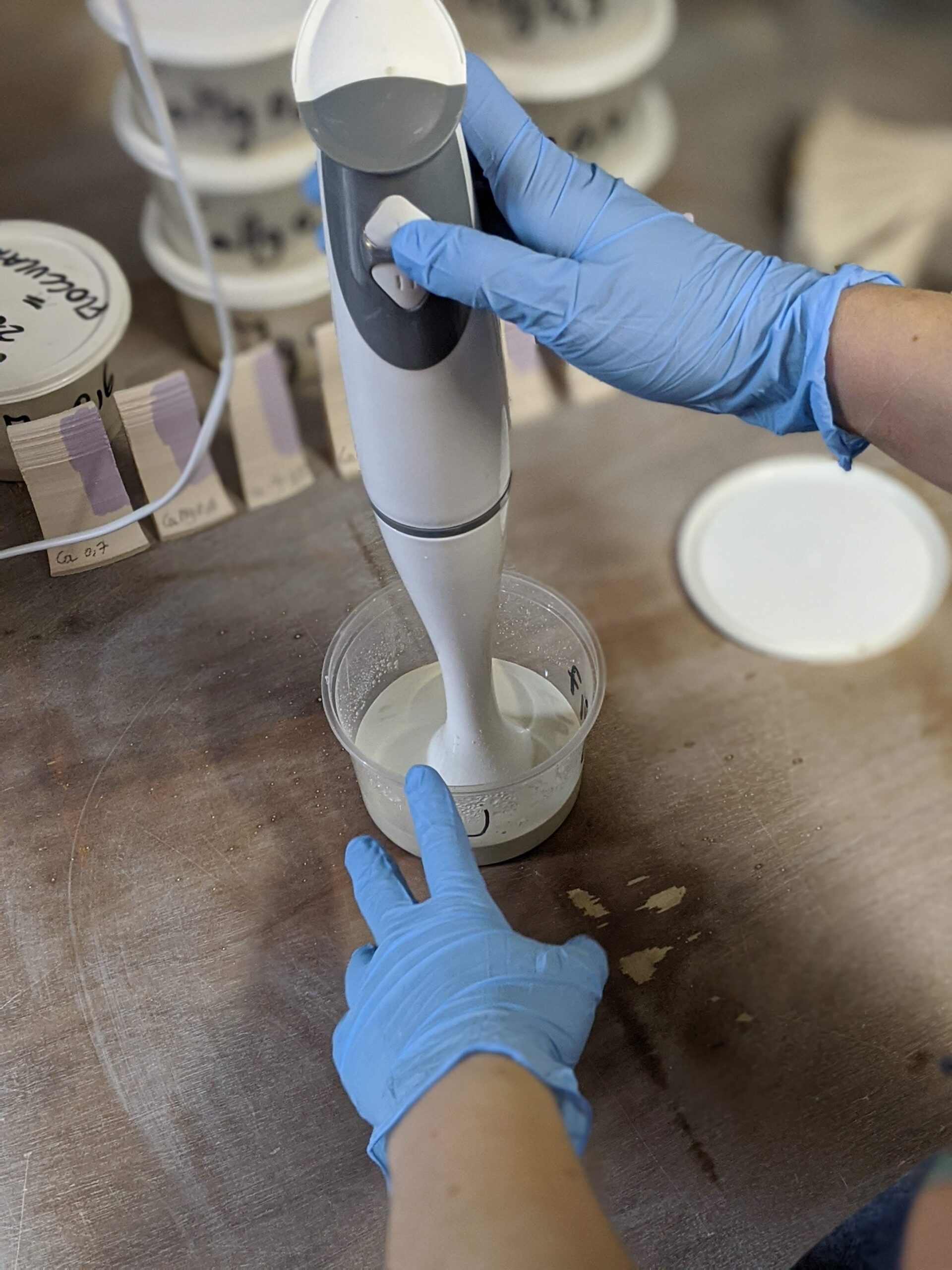
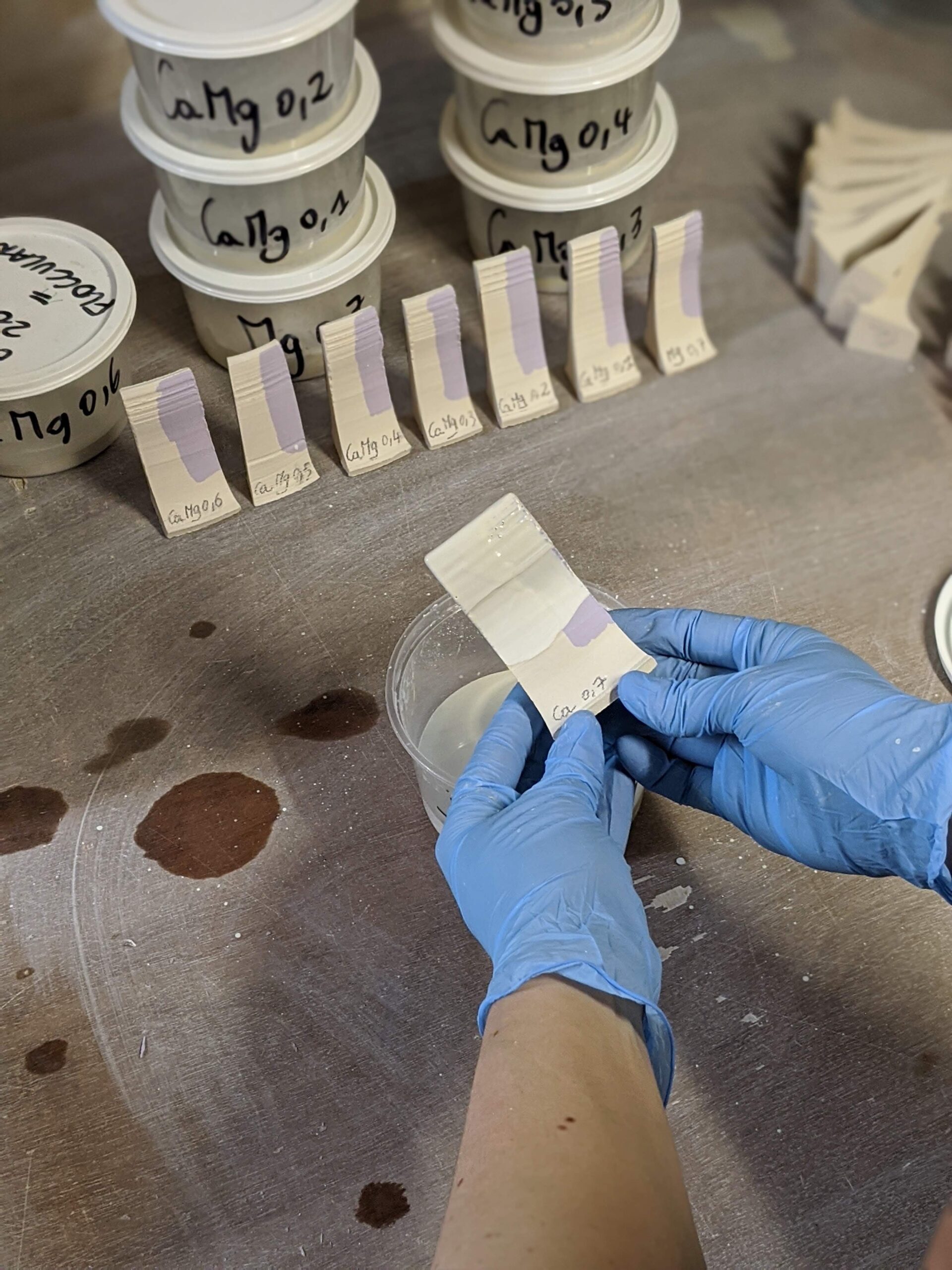
In the afternoon, we’ll put the theory into practice by working on your own glaze projects. Before the workshop, you’ll receive a questionnaire in which you can describe your project. This allows me to prepare and help shape your glaze project in the best possible way. If you don’t have a project of your own, you’ll work together with another participant.
On the second day we will review, analyse and improve your own glaze recipes using Glazy.org. Among other things, we’ll explore the Stull map, the graph you may have seen in Glazy without fully understanding what it represents. We’ll change that. We’ll examine silica-to-alumina ratios, flux ratios, and learn what these values actually mean.
Building on the theory we’ve covered, we’ll take a closer look at glaze stability and the differences between matt and glossy glazes. Using the software, we’ll learn how to improve our own glaze recipes, at least in theory. We’ll then return to our practical glaze projects and continue developing them with the help of our newly acquired understanding.
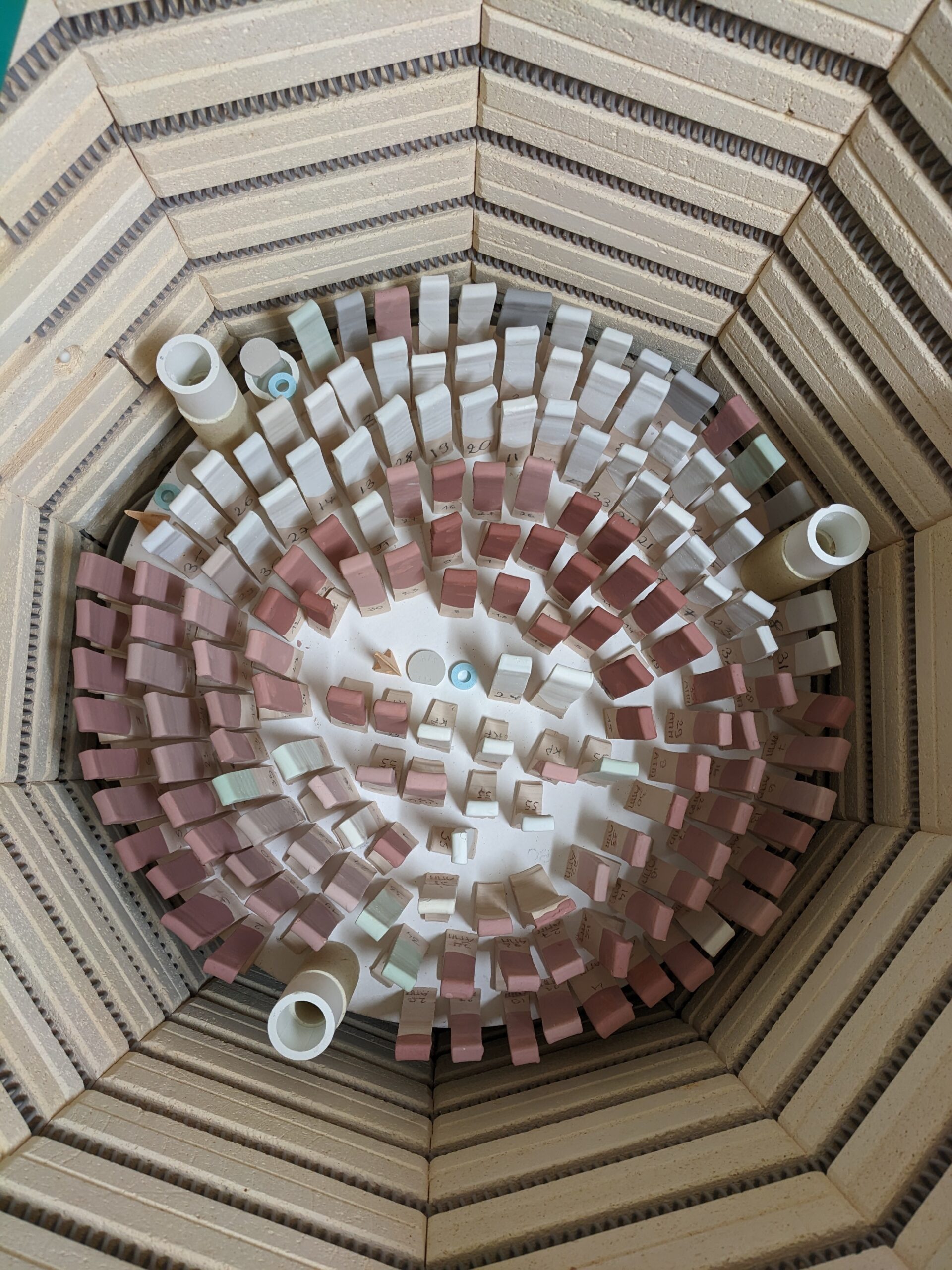
The samples will be fired and discussed on our latest evening. We’ll review each other’s test tiles and discuss possible improvements, so you can continue developing your glazes at home with confidence.
Experiences
from potters
“The two-day glazing workshop is highly recommended! With Sofie as a guide, a difficult subject becomes understandable. The book is a great reference. Thank you Sofie, this leaves me wanting more!”
“I attended the two-day beginner's glazing course. Although I already had some experience, this course was still very engaging and informative.
Starting to make your own glazes can sometimes be daunting due to the overwhelming amount of information and complex subject matter. Sofie explains this complex world of glazes in a very accessible way, which suddenly lowers the barrier to entry considerably and only increases the desire to get started.
I look forward to another workshop to delve deeper into this magical world.”
“I learned a lot during the glaze two-day course. The course is a nice mix between theory and practice. Sofie is a structured teacher who can clearly present the theoretical background. This course is definitely recommended when you start making glazes yourself.”


